
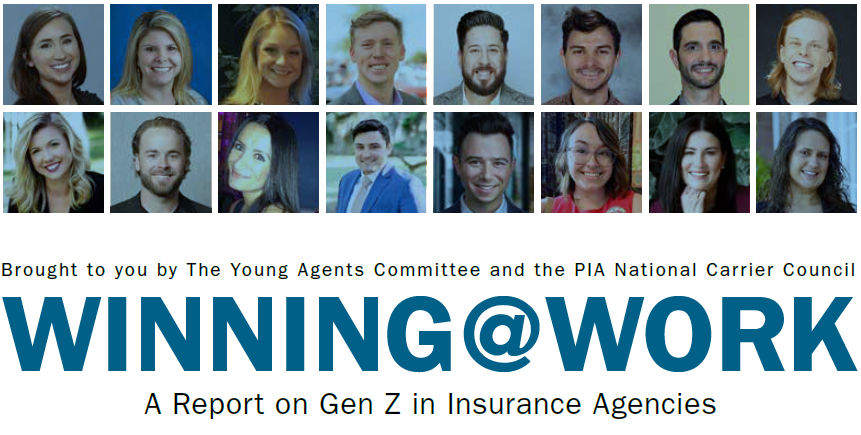
Every insurance agency wants to attract—and grow—the next generation of leaders. But what matters most to Gen Z? We know they place a high priority on several things that go beyond salary and benefits.
To help agency owners and principals identify ways to appeal to and motivate next generation leaders, we talked to agency employees, managers, and owners in a variety of roles across the United States to understand the ways they think about their jobs and careers. They shared stories about the unique opportunities and challenges they face in today’s market and the ways they’re looking to make an impact.
This is an industry-wide issue. According to a recent US Chamber of Commerce report, less than 25% of people in the insurance industry are under age 35, while the number of people 55 and older has increased 74% in the last 10 years.
This report, Winning@Work, has been created by PIA’s Young Agents Committee and The PIA Partnership, the organization’s carrier council. It’s based on discussions with more than 35 agency employees and owners during November 2024-January 2025 that covered five key areas:
- Culture
- Growth
- Flexibility
- Mentors
- Technology

Two things are clear. Agencies must act quickly to attract, hire, and retain Gen Z employees so they’re ready to grow into key positions as other employees retire. And next generation leaders are drawn to agencies that provide a sense of purpose and community, and take an interest in their development and careers.
All of the areas discussed—culture, growth, flexibility, mentors, and technology—are connected. Having a positive culture means the agency is providing growth and professional development opportunities and offers flexibility, for example. Throughout the discussions, agents cited examples of loving their jobs because they were not only challenged, but had mentors who helped guide them on approaches to growth and more responsibility. Flexibility is important, and it’s not a one-size-fits-all. We found that flexibility wasn’t only about virtual work or work-from-home. Job responsibilities, dress codes, office culture, and goals and results were all factors in whether or not an agency was considered to be flexible. And technology is important as an enabler across all the areas— something important to both next generation employees and agency owners.
Click here on the different sections of the report to delve into the findings: